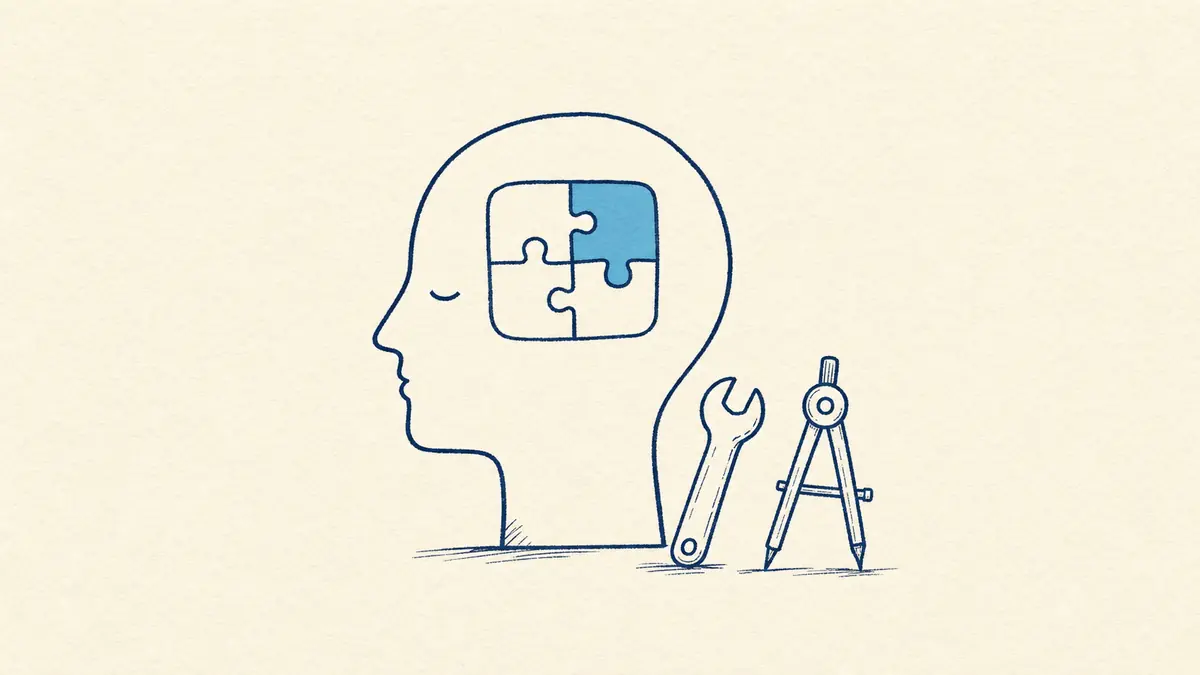
ISTP strengths and weaknesses are the personality-type question ISTPs are systematically the worst at answering — because the question feels like performance, and ISTPs refuse to perform. The Virtuoso stereotype paints them as quiet problem-solvers, which is half-true; the missing half is what costs ISTPs the offer: the panel asked a question, the candidate gave a one-line answer that read as "doesn't take this seriously," and the offer went to a less competent but more performatively articulate candidate. This article is the hiring-desk read from 15 years of interviewing, including the fix for the question that costs ISTPs the most.
The ISTP pattern in 50 words. ISTP strengths cluster around first-principles problem solving, tool mastery, and crisis-mode calm when the work is on fire. ISTP weaknesses cluster around the strengths/weaknesses question itself, inferior-Fe room-reading, and underexplaining the reasoning. The strong ISTPs in my interviews are the ones who treat the strengths/weaknesses question as a structural challenge, not a performance test.
What is an ISTP?
ISTP stands for Introverted, Sensing, Thinking, Perceiving — one of the 16 personality types used in interview self-assessment. The cognitive stack is Ti-Se-Ni-Fe: dominant Introverted Thinking runs a private logic-test on every claim, auxiliary Extraverted Sensing reads the live situation and the live tools, tertiary Introverted Intuition pattern-matches in the background, and inferior Extraverted Feeling is the part that under-reads the emotional state of the room.
The practical hiring-desk read on ISTP strengths and weaknesses: ISTPs walk in with sharper reasoning than the rest of the slate and present less of it visibly. The Ti runs the real assessment internally, the answers arrive trimmed of the reasoning that produced them, and the panel reads less depth than is actually there. The fix is mechanical, not personality-changing. Treat this as language for patterns, not a diagnosis.
Top 5 ISTP strengths in interviews
These are the ISTP strengths I see across hundreds of interviews — the ones that show up across the table, not the ones a personality blog will name.
1. First-principles problem solving
Strong ISTPs disassemble the problem before defaulting to precedent. The team is stuck because the current process isn't working; the ISTP doesn't ask what the process is, they ask what the process was supposed to accomplish. From there, the question changes. That's Ti in action — refusing to accept the framing that arrived with the problem. In a debug-heavy role (engineering, surgery, mechanical, investigation), this is the highest-leverage trait on the team. The companies that hire ISTPs into "go figure out what's actually broken" roles and protect them from meeting-heavy weeks get the value. The companies that put ISTPs in coordination roles waste it.
2. Tool-mastery instinct
Hand an ISTP a new system on Monday and by Friday they know it better than the colleagues who've used it for a year. The pattern repeats across mechanical tools, software stacks, surgical instruments, weapons systems, kitchen equipment — the domain doesn't matter; the underlying cognitive move does. Se feeds the tool's behavior to Ti, Ti maps the principles, and the ISTP is now generalizing beyond what the documentation covers. In an interview, ask "describe a tool or system you picked up faster than the team expected." Strong ISTPs always have an answer with a specific timeframe and a specific outcome.
3. Crisis-mode calm
The system is down. The patient is crashing. The deal is collapsing. The ISTP is the calmest person in the room — not because they're brave, but because Ti-Se is running the next move while everyone else is still processing what happened. The reference call confirms it: "he's who I want next to me when something is on fire." That's not a stress-resilience trait. That's Ti finding the next correct action faster than panic can compete with it. In ER, incident command, SRE, trading desks, special operations, this trait is the entire job.
4. Bullshit detector
The ISTP listens to a reasoning chain and stops at the first link that doesn't hold up. Other candidates absorb the same chain politely and move on. ISTPs ask the awkward question — and in 80% of the cases I've watched, the awkward question was the right question. In an interview, the tell is whether the ISTP can describe a time they pushed back on senior reasoning and were correct, and whether they can also describe a time they pushed back and were wrong and updated. Both stories matter. The first one shows the trait works; the second shows the candidate has calibrated it.
5. Hands-on competence that scales
The same underlying cognitive pattern that makes an ISTP good with a wrench makes them good with a debugger, a scalpel, a CNC machine, and a deployment pipeline. The domain doesn't matter; the work does. In a senior interview, the most useful question is "walk me through the most complex thing you've built or fixed by hand." Strong ISTPs answer in technical detail without performing the technical detail. The detail is for the panel's information. The performance would feel false to the candidate, and the absence of performance is itself the signal.
Top 5 ISTP weaknesses in interviews
Now the part the validation blogs skip — the ISTP weaknesses I see across the table, not the cosmic flaws of the type. These are what cost ISTPs the senior offers they should be winning.
1. The strengths/weaknesses question itself
This is the biggest one, and it's specific to the interview format. The panel asks "what's your biggest weakness," and the ISTP either gives a non-answer ("I work too hard") or a too-honest answer ("I don't suffer fools well") that reads as either evasive or arrogant. Both versions cost the offer. The fix is to treat the question as a structural challenge, not a performance test. Name one real weakness with the fix you've already built around it: "I underexplain my reasoning, which costs me on cross-functional reviews — I've started narrating the path out loud even when the answer feels obvious." Real content. No performance. Done.
2. Inferior-Fe fragility
The interview is a Fe-heavy environment by design, and Fe sits in the inferior slot for ISTPs. The panel reads warmth as competence-adjacent and reads cool detachment as low-competence. Both readings are wrong about the ISTP, but the interview format doesn't care. The fix isn't to fake warmth — that fails in 90 seconds. The fix is to make one specific Fe move per interview: name the interviewer's first name once, ask one genuine question about the role they personally are doing, and close with one specific thing you'd want to learn from working with them. Three Fe data points the panel can pattern-match to "this candidate sees us as people."
3. Underexplains the reasoning
The ISTP gives the answer and skips the path that produced it. The panel hears "the right answer" and "no work shown." For a senior role, the path matters as much as the conclusion — the panel needs to see that the answer would replicate on a different problem. The fix is to add one sentence in front of every answer: "Here's the path: I'd start by checking X, because Y is the constraint that usually breaks first. Then I'd…" The path-sentence costs ten seconds. Without it, the answer reads as luck. With it, the answer reads as method.
4. Conflict-through-disengagement
When politics arrive in the room, the ISTP disappears. Not literally — but the answers get shorter, the body language pulls back, the eye contact drops. The panel reads it as "can't navigate politics." What's actually happening: Ti has registered the political move as not worth engaging, and the ISTP has rationally decided to wait it out. From the panel's perspective, the decision looks like withdrawal. The fix is one sentence: "I want to make sure I understand the actual decision being made before I respond — can you say more about what's driving this?" Says you're paying attention. Buys time. Keeps the candidate in the room.
5. Long-term planning aversion
"Where do you see yourself in five years?" The ISTP's honest answer is "I'll know when I'm there." The panel hears "no career arc." The fix is to pre-write three concrete five-year markers — a domain, a technical depth, and one capability you'd want to have built — and rehearse the answer once. Inferior-Ni doesn't need to be brilliant in real time. It needs to have been written down on Sunday. Fifteen minutes of prep, completely different read of the candidate.
What r/istp actually says about themselves
The r/istp community is more self-aware about its weakness patterns than the Virtuoso stereotype suggests. The threads cluster around three recurring themes that map cleanly to what shows up in interviews.
The "I bomb interviews" self-reports name the strengths/weaknesses problem from the inside. ISTPs describe knowing the role, knowing they could do it, and watching the conversation fall apart on the soft-skills questions. The strongest commenters land on the same fix Alex landed on: treat the question as structural. Name one real weakness with the fix attached. The performance the panel is asking for is incidentally satisfied by the structural answer.
The "people think I don't care" threads name the inferior-Fe pattern directly. ISTPs describe colleagues misreading their cool detachment as low investment, then revising the read 18 months later when the work output proves the opposite. The community's strongest advice: make one specific Fe move per major interaction. Not warmth-as-performance. One real piece of attention that the colleague can pattern-match to "this person sees me."
The "I disappear from political meetings" threads name the conflict-through-disengagement pattern from the inside. ISTPs describe Ti registering the political move as wasted effort and the body responding by pulling out of the conversation. The community's fix matches Alex's: one sentence that says "I'm paying attention; help me understand the decision being made." Cheap to deploy. Keeps the candidate in the room.
Stereotype vs. reality for ISTPs
Stereotype: ISTPs are quiet because they have less to say. Reality from 15 years of hiring: ISTPs are quiet because Ti is running the real assessment internally and the verbal output is the summary, not the work. The "less to say" framing confuses verbal volume with reasoning depth. The reasoning is happening. It's just not being narrated.
Stereotype: ISTPs can't lead. Reality: ISTPs lead through competence and crisis-mode reliability — different mechanisms than NT or EJ leaders, and often more durable in technical organizations. The teams that survive five-year runs in engineering, surgery, military operations, motorsports, are disproportionately led by ISTPs. The leaders rotate through. The ISTPs build careers in them.
Stereotype: ISTPs are mechanical and unemotional. Reality: Fe sits in the inferior slot and surfaces in crisis. The ISTP who looks unemotional on Tuesday is the one who'll stay up all night helping a colleague debug a personal emergency on Friday. The feeling is real. It's just not performed at low stakes.
How to interview an ISTP (or be one in an interview)
For hiring managers: Three questions that surface real ISTP patterns. (1) "Walk me through the most complex thing you've built or fixed by hand, in technical detail." Surfaces first-principles reasoning and tool mastery directly. (2) "Describe a time you pushed back on senior reasoning and were correct, and a time you pushed back and were wrong." Tests the bullshit detector and whether it's calibrated. (3) "What's a real weakness and what's the fix you've built around it?" Tests whether the candidate has learned to answer the strengths/weaknesses question structurally rather than performatively.
For ISTPs in interviews: Three framing tips. (1) For the strengths/weaknesses question, treat it as a structural challenge. Name one real weakness with the fix attached. Two sentences, real content, no performance. Single highest-leverage interview move. (2) Make one specific Fe move per interview — first name once, one question about the interviewer's actual role, one specific thing you'd learn from working with them. Three data points the panel pattern-matches to "this candidate sees us." (3) Add a path-sentence in front of every technical answer. Ten seconds of "here's how I'd approach this, because X is the constraint that usually breaks first" flips the read from luck to method.
If you want the cross-type read, the INTP strengths and weaknesses page covers the intuitive cousin running the same Ti machinery — same logical bar, longer-arc, less Se-driven hands-on execution. The ENTJ strengths and weaknesses page covers a useful cross-temperament read — extraverted Te-dominant strategic leadership, the type that often hires senior ISTPs and benefits from understanding how the Ti-engine works underneath. For the wider context, the list of personal strengths and list of personal weaknesses pages have the language an ISTP can use when the interview doesn't go anywhere near personality type.
Frequently asked questions
What are ISTP weaknesses?
The five I see most often from the hiring desk are the strengths/weaknesses question itself feeling like performance and getting a minimal answer that costs the offer, inferior-Fe fragility that under-reads the emotional state of the room, underexplaining the reasoning so the panel hears the answer but not the path that produced it, conflict-through-disengagement where the candidate pulls out of the conversation when politics arrive, and long-term planning aversion that's sharp on the now and vague on the 18-month arc. None are character flaws — they're predictable failure modes of a Ti-dominant cognitive stack inside an interview format almost optimally designed to reward the performance an ISTP refuses to give.
What are ISTP strengths?
ISTP strengths cluster around five hiring-desk patterns: first-principles problem solving that disassembles the problem before defaulting to precedent, tool-mastery instinct that picks up new systems faster than the team expects, crisis-mode calm when something is actually on fire, a bullshit detector that won't accept reasoning that doesn't hold up, and hands-on competence that scales across mechanical, software, surgical, and operational domains. These show up as a candidate who answers fewer questions than the rest of the slate but answers them with unusual precision.
What should an ISTP actually say when asked about strengths and weaknesses?
Treat the question as a structural challenge, not a performance test. For strengths: name one concrete capability with a specific outcome — "I rebuild systems faster than the team expects; in my last role I cut deploy time from 40 minutes to 6." For weaknesses: name one real pattern with the fix you've already built — "I underexplain my reasoning, which costs me on cross-functional reviews; I've started narrating the path out loud even when the answer feels obvious." Two sentences, real content, no performance.
What jobs are best for ISTPs?
Roles where hands-on problem-solving, tool mastery, and crisis-mode calm are the deliverable: software engineering (especially infrastructure, SRE, and security), mechanical and aerospace engineering, surgery and emergency medicine, military special operations, professional flying, motorsports, locksmithing, electrical and plumbing trades, machinist work, IT operations, penetration testing, fire and EMS leadership, industrial automation, and forensic investigation. ISTPs underperform in roles built around constant meetings, political navigation, or deliberately ambiguous work. They overperform in any role where the problem is concrete, the tools are real, and the work shows whether you knew what you were doing.
One thing to do today
If you're an ISTP prepping for an interview, here's the one move that closes the most ground: pick one real weakness and write two sentences — the weakness, and the specific fix you've built around it. "I underexplain my reasoning, which costs me on cross-functional reviews. I've started narrating the path out loud even when the answer feels obvious." That's it. Two sentences. Real content. No performance. The strengths/weaknesses question is the single biggest place ISTPs lose offers they should be winning, and 10 minutes of structural prep flips it.
Alex Host has spent 15+ years building, hiring for, and selling small businesses across the Midwest. He's interviewed 500+ candidates across roles ranging from cleaning crew to engineering lead.
This article is part of My Strengths and Weaknesses, a resource library covering interview prep, personality types, and self-assessment. The author also runs Hosted Brands, a SaaS portfolio for local service businesses.
Found this useful? The full list of 16 personality types and their strengths and weaknesses is the hub for this silo.