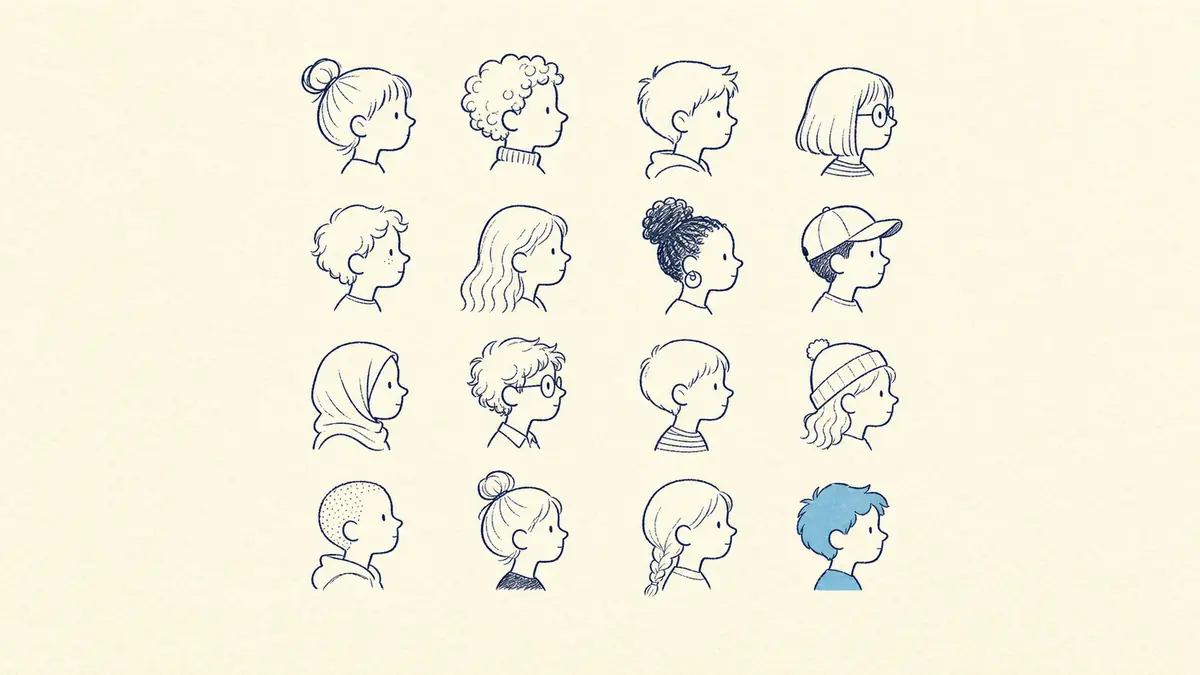
The personality strengths and weaknesses question is the most common open-ended question I ask, and the answers cluster into patterns that line up almost exactly with the 16 MBTI types. I'm not a psychologist. I'm the hiring manager at Top Care Cleaning, and over 15 years I've sat through hundreds of interviews — enough to see the same strengths and weaknesses show up again and again, sorted by type. This page is the hiring-desk read on all 16 of them, with links to a separate page for each type.
The 16-type pattern in 50 words. Personality strengths and weaknesses cluster into 16 MBTI types grouped by four temperaments — Analysts (NT), Diplomats (NF), Sentinels (SJ), and Explorers (SP). From the hiring desk, each type's strengths and weaknesses surface as predictable interview patterns. The 16 leaf pages on this site cover each type from the panel's side.
What the "personality strengths and weaknesses" question is really asking
When I ask "tell me about your strengths and weaknesses," I'm not running a personality test. I'm testing three things, and almost every candidate misses at least one.
The first thing I'm testing is whether you've thought about yourself the way an adult thinks about a coworker — concretely, with examples, and without performance. The second is whether the strength you name and the weakness you name come from the same person. A lot of candidates pick a strength from their best day and a weakness from someone they read about online; the two don't match, and the answer falls apart on the follow-up. The third is whether your weakness is real. The "I work too hard" version of the answer is a script, and I've heard it enough times to mark it before the sentence finishes.
The 16 MBTI types help with all three. If you know your type, you have a framework for picking a strength that's genuinely yours and a weakness that's the natural other side of it. You don't have to invent. You have to translate.
That's the point of this page. The hub for the personality-type silo on this site, with the 16 leaf pages doing the deep work and the quick-reference table below giving you the one-line version of each.
The 4 temperaments (and the 16 types that fit inside them)
David Keirsey's temperament grouping is the cleanest way to read the 16 types if you're trying to get oriented fast. Four temperaments. Four types each. Each temperament has a shared rhythm that shows up in interviews before the four-letter code does.
NT — Analysts (INTJ, INTP, ENTJ, ENTP)
The Analysts walk in with a framework. They want to know how the job works before they answer how they'd do it. In an interview, their strengths cluster around structural thinking, long-horizon framing, and the willingness to push back on a vague brief. Their weaknesses cluster around the inferior-Feeling blind spot — answers about teammate conflict get short and clinical when the panel wanted two paragraphs of texture.
Four leaf pages cover the read on each: INTJ strengths and weaknesses for the strategist who runs the long arc inside their head; INTP strengths and weaknesses for the systems-thinker whose answer is one layer abstracted from the question; ENTJ strengths and weaknesses for the Commander pattern, including the praise-hollowness tell I see in almost every ENTJ interview; and ENTP strengths and weaknesses for the debate-mode operator whose Perceiving rhythm is very different from the ENTJ's.
NF — Diplomats (INFJ, INFP, ENFJ, ENFP)
The Diplomats walk in with a story. They read the panel's mood before they read the question. Their strengths cluster around strategic empathy, mission alignment, and a quiet conviction that holds under pressure (or — for the extraverted half — a warmer version of that conviction that gets the room on its side fast). Their weaknesses cluster around boundary erosion, the cryptic-answer reflex, and burnout gaps in the resume that aren't lied about but aren't unpacked either.
The four leaf pages: INFJ strengths and weaknesses for the Advocate pattern, including the doormat tell and the door-slam history; INFP strengths and weaknesses for the values-driven candidate whose strongest signal is what they refuse to fake; ENFJ strengths and weaknesses for the Teacher pattern that runs the room with warmth rather than tempo; and ENFP strengths and weaknesses for the Champion whose extraversion can hide a real depth the panel needs to ask for directly.
SJ — Sentinels (ISTJ, ISFJ, ESTJ, ESFJ)
The Sentinels walk in with a record. They want to tell you what they've done, in order, with the receipts. Their strengths cluster around reliability, attention to standards, institutional memory, and a steadiness that's badly underrated by panels that overweight charisma. Their weaknesses cluster around risk aversion, attachment to existing systems, and an interview rhythm that can read as slow when the panel is moving fast.
The four leaf pages: ISTJ strengths and weaknesses for the Inspector pattern that owns the small details most candidates don't notice; ISFJ strengths and weaknesses for the Protector pattern whose loyalty is real and whose self-promotion gap is real (and fixable in 30 seconds with the right framing); ESTJ strengths and weaknesses for the Executive who runs operations the way other people breathe; and ESFJ strengths and weaknesses for the Provider whose people-first instinct can be the difference between a team that holds together and one that doesn't.
SP — Explorers (ISTP, ISFP, ESTP, ESFP)
The Explorers walk in ready. They don't pre-process the way the NTs and NFs do. Their strengths cluster around real-time problem-solving, hands-on competence, calm under pressure, and a refusal to over-script. Their weaknesses cluster around the planning-horizon gap (the next 90 days are clearer than the next 18 months), and an interview style that can undersell strategy chops they actually have.
The four leaf pages: ISTP strengths and weaknesses for the Crafter whose tactical fluency is the strongest tell in trades and technical roles; ISFP strengths and weaknesses for the Artist pattern whose values run quieter than the NF version but show up in every choice they describe; ESTP strengths and weaknesses for the Promoter whose room-reading is the most underrated competence in the entire type table; and ESFP strengths and weaknesses for the Performer whose live-environment instincts are the version of strategic thinking most panels don't know how to score.
Quick-reference table: all 16 personality types
One row per type. Stereotype name, the hiring-desk read on the top strength, the hiring-desk read on the top weakness, and the role context where I've seen the type do its best work. Type names link to the leaf page.
| Type | Stereotype | Top Strength | Top Weakness | Best-fit Role Context |
|---|---|---|---|---|
| INTJ | The Strategist | Long-arc planning under uncertainty | Slow to surface disagreement until it's escalated | Strategy, research, founder/operator |
| INTP | The Architect | Systems thinking across domains | Answer one layer abstracted from the question asked | R&D, systems design, technical writing |
| ENTJ | The Commander | Decision velocity under ambiguity | Inferior-Feeling blind spot on teammate conflict | Ops leadership, BD, founding-team operator |
| ENTP | The Debater | Reframing the question productively | Switching modes mid-answer; hard to pin down | Product, consulting, early-stage operator |
| INFJ | The Advocate | Strategic empathy + quiet conviction | Boundary erosion, the door-slam exit | Counseling-adjacent, editorial, strategy-with-mission |
| INFP | The Mediator | Values-driven choices that don't bend | Underselling concrete achievements | Writing, mission-driven roles, editorial |
| ENFJ | The Teacher | Running the room with warmth | Over-tending the team's feelings vs. the work | People leadership, training, customer success |
| ENFP | The Champion | Activation energy + buy-in | Follow-through on long-tail tasks | Sales, marketing, early-stage anything |
| ISTJ | The Inspector | Reliability + institutional memory | Risk aversion when the playbook is unwritten | Operations, finance, compliance, QA |
| ISFJ | The Protector | Loyalty + attention to others' needs | Self-promotion gap (real impact undersold) | Healthcare-adjacent, admin, customer support |
| ESTJ | The Executive | Organizational drive + standards | Treating preferences as facts | Plant management, ops leadership, supervisor roles |
| ESFJ | The Provider | Team cohesion + hospitality instinct | Conflict avoidance when standards slip | Customer success, HR, hospitality leadership |
| ISTP | The Crafter | Hands-on troubleshooting | Selling the strategic value of tactical work | Trades, engineering ICs, technical support |
| ISFP | The Artist | Values shown through specific choices | Underselling work that "spoke for itself" | Design, creative roles, hands-on care work |
| ESTP | The Promoter | Real-time room-reading | Underselling planning chops they actually have | Sales, field operations, crisis-response leadership |
| ESFP | The Performer | Live-environment instinct | Treating planning as the opposite of presence | Hospitality, events, customer-facing operations |
The table is the page's quickest answer. The leaf pages are the slow answer. Both are necessary.
How to find your type
If you don't already know your four-letter code, take a free version of the test before you keep reading the leaf pages. The two paths I'd point to are the 16Personalities version (10 to 12 minutes, plain English) and the Truity TypeFinder (similar length, slightly more academic framing). Both spit out a four-letter code and a short read on your type.
A note on accuracy. These tests are inventories, not diagnoses. You'll read the result and either nod or argue with it. If you're arguing — meaning the description doesn't sound like you within the first three paragraphs — you're probably mistyped, and the fix is to read the two or three closest neighbors. Most mis-typings I've seen are one letter off (usually I/E or J/P), and the leaf pages on this site make those distinctions explicit. Once the description lands, you've got a frame you can use for the rest of this page.
What MBTI gets right (and what it misses)
I'm a hiring manager, not a psychologist. So this section is calibration, not theory.
What MBTI gets right is that there are patterns. Once you've interviewed 500 people across 20 years, you stop seeing strangers and start seeing patterns, and the 16-type framework names those patterns better than almost any other system I've tried. The introverted-intuitive candidate gives a different kind of answer than the extraverted-sensing candidate, and naming that difference makes me a better interviewer and them a better candidate. The strengths and weaknesses cluster by type because the underlying cognitive rhythm clusters by type. That part is real.
What MBTI misses is that it's not a clinical instrument. It's a useful frame, not a measurement. Big Five (the personality model academic psychologists actually use) is more validated, more stable, and less catchy. The MBTI test you take online will categorize you cleanly into one of 16 boxes; your actual personality is a smear across multiple dimensions, and pretending it isn't is the part of MBTI that gives serious psychologists their headache. The four-letter code is real enough to be useful and not real enough to be a diagnosis. Both of those statements are true at the same time.
The other thing MBTI misses is development. The version of an ENTJ I'd hire today and the version I'd have hired ten years into a career are different people with the same code. Type doesn't tell you which functions someone has worked on. Maturity does. In an interview, I'm reading both at once.
Treat what's on this page — and the 16 leaf pages — as language for describing patterns. If you need a real personality diagnosis, that's a different conversation with a different professional. Don't let a four-letter code do work it's not equipped to do.
How to talk about your type in an interview (a 3-step framework)
The framework below works for any of the 16 types. I built it from the pattern that runs through every leaf page on this site. Three steps. Each one short.
Step 1 — Name the strength concretely. Don't say "I'm an ENTJ so I'm decisive." Say "I make decisions fast, sometimes too fast — last month I locked in a vendor on the second call, and the team had the contract drafted by Friday." Specific verb, specific time, specific outcome. The type label is optional. The example is mandatory.
Step 2 — Name the weakness with a real specific story. This is the step every candidate skips. Say "the weakness on the other side of that strength is that I sometimes lock in too early — six months ago I committed to a software roll-out before I'd talked to the team using the previous tool, and I had to walk it back two weeks in." The same situation needs to have a strength side and a weakness side, told by the same person.
Step 3 — Name the calibration move you've built around it. Say "what I do now is force a 48-hour delay on any decision over $5K — I write the call, sit on it for two days, and come back to it. Half the time I change my mind, which tells me how often the first instinct was wrong." This is the part that turns a self-aware answer into a hiring decision. Strengths plus weaknesses plus the move you've built equals a candidate who'll keep getting better at the job.
If you can run that three-step structure on your type's top strength and top weakness — pulled from your leaf page — you're already ahead of most candidates I've sat across from. The script is replicable. The specificity is yours.
For the cross-cluster background language — the strengths and weaknesses vocabulary that works regardless of type — the list of personal strengths and list of personal weaknesses pages cover the words to use, and the 16 strengths and weaknesses examples for a job interview page covers the answers that have worked.
Frequently asked questions
What are personality strengths and weaknesses?
Personality strengths and weaknesses are the recurring patterns in how someone thinks, decides, and handles other people that show up reliably enough to predict job behavior. The 16 MBTI types group those patterns into four temperaments — Analysts, Diplomats, Sentinels, and Explorers. From the hiring desk, each type has 4 to 5 strengths and 4 to 5 weaknesses that surface again and again across hundreds of interviews. Treat this as language for describing patterns, not a clinical diagnosis.
Which MBTI type is most successful?
There is no single most-successful type. The honest hiring-desk read is that success tracks the fit between a type's natural rhythm and the actual demands of the role. ESTJs and ENTJs run organizations because they like running organizations. INFJs and INFPs do their best work in counseling-adjacent or written roles where depth gets paid. ISTPs and ESTPs dominate hands-on technical and crisis work. The most-successful-type question is usually the wrong question. The right question is which type fits which role.
Are MBTI tests accurate for interviews?
MBTI is not clinically accurate the way a Big-Five score is. It is useful in interviews as language. If you can describe your strengths and weaknesses using your type's actual patterns, with a real example for each, you sound clearer than a candidate who is winging it. The mistake to avoid is treating the four-letter code like a diagnosis. Use it the same way you would use any other framework: as a way to describe what you have actually done.
What is the best MBTI type for leadership?
The stereotype answer is ENTJ or ESTJ — Commander and Executive. The hiring-desk answer is that the best leaders I have hired came from across the type table, including INFJs who led with conviction and INTPs who led by removing obstacles. The pattern that matters more than type is whether the candidate has been demoted once and learned what their rhythm costs the team running it. That single experience predicts leadership performance better than any letter code.
Should I mention my MBTI type in an interview?
Only if you can use it to make a specific point — never as a credential. Saying I am an INFJ tells the panel nothing. Saying I am an INFJ which means I tend to over-prepare and under-talk in groups so I have built the habit of speaking up in the first 10 minutes of a meeting tells the panel something useful. Use the type as a frame for a real example, then drop it.
How do I find out my MBTI personality type?
Take a free version of the Myers-Briggs-style test at 16personalities.com or truity.com. Both give you a four-letter code in 10 to 15 minutes. The result is a starting point, not a final answer — read your type page on this site or elsewhere and check the descriptions against your actual behavior. If the description does not feel right within the first three paragraphs, you are probably mistyped, and the fix is to read your two or three closest neighbors and pick the one that lands.
Can my personality type change over time?
The four-letter code itself is relatively stable. What changes is which functions a person has developed. A 22-year-old ENTJ and a 45-year-old ENTJ share the same dominant function but use it very differently because the older one has spent two decades working on the inferior side. From the hiring desk, the candidates who feel most like themselves are usually 35 plus and have done that work. Younger candidates often interview as the cleaner stereotype version of their type.
One thing to do today
Pick your four-letter code. Open your leaf page from the table above. Read the top strength and the top weakness — just those two — and write down a real example for each, using the three-step framework above. Specific verb, specific time, specific outcome, calibration move. Five minutes of writing closes more interview gaps than any other prep I've watched candidates do.
Alex Host has spent 15+ years building, hiring for, and selling small businesses across the Midwest. He's interviewed 500+ candidates across roles ranging from cleaning crew to engineering lead. This is the hiring-desk read on personality strengths and weaknesses — not the horoscope version.
This article is the hub page for My Strengths and Weaknesses, a resource library covering interview prep, personality types, and self-assessment. The author also runs Hosted Brands, a SaaS portfolio for local service businesses.