10 Marketing Strengths and the List of Marketing Skills Hiring Panels Actually Listen For
By Alex Host — hiring manager, Top Care Cleaning
The marketing strengths question is the one I've watched candidates win or lose for 15 years on my hiring desk. The family cleaning business has hired marketers and marketing-adjacent agency partners every season since I took the chair, and I've sat on a stack of marketing-manager and marketing-coordinator panels across the Grand Rapids agency network as a courtesy panelist. The patterns are the same in every room. Most candidates list adjectives. The ones who get hired point to a specific recent campaign, a specific number, and a specific brake on their weakest channel.
The contrarian read: hiring panels are not actually screening for marketing skills the way most candidates think. The résumé screen already filtered for skills — that's what the keyword scan and the portfolio link did. By the time you're in the room, the panel is listening for marketing strengths evidenced by a recent campaign, not marketing skills enumerated in a list. The candidate who walks in and lists "SEO, paid search, content, email, social, brand, analytics" has told the panel nothing the résumé didn't already say. The candidate who walks in and says "last quarter I rebuilt our paid search account into 14 ad groups by intent stage and dropped CAC 22% while holding volume" has told the panel something the résumé couldn't have.
This is the field guide for the second half of that conversation. Ten marketing strengths with the panel-trigger note under each, the list of marketing skills that map to those strengths, the marketing-manager variant, and the weaknesses you can defensibly share with the brake already on.
What hiring panels actually listen for in marketing interviews
The standard advice — "list relevant skills and a weakness that's a strength in disguise" — has been written so many times that every marketing panel I've sat on has heard the answers it produces. "I'm a creative thinker who's also data-driven" reads as a rehearsed line, the folder closes a millimeter, and the offer goes to the third candidate of the day.
Four failure modes show up in marketing panels specifically. The unevidenced channel claim — "I'm strong in SEO" with no named site and no traffic number. The strength-without-the-metric — "I'm an analytical marketer" with no number on the table, in one of the most measurable functions on the org chart. The channel mismatch — telling a paid-first DTC panel you're strongest at long-form content, or vice versa. And the volume mistake — listing eight strengths when the panel asked for one.
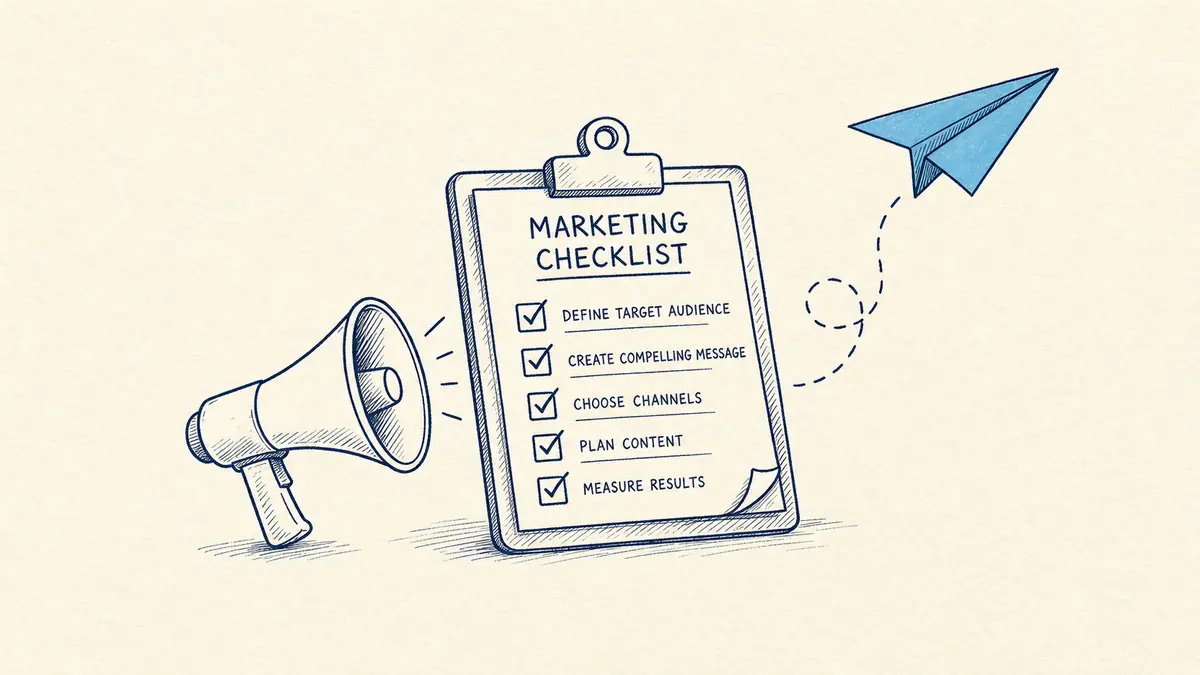
What panels actually listen for, in order: a specific recent campaign, the business question it was solving, the channel mix or creative call you made, the result with a real number, and one sentence on what you'd do differently. That's a 90-second answer that tells the panel you can think strategically, execute, measure, and self-correct.
The other thing panels listen for at the manager level: did you kill anything last quarter. A marketing leader who can't name something they stopped doing is a leader whose budget is leaking. The best manager answer I've heard in a panel was "I cut our LinkedIn paid spend to zero last quarter because attribution showed zero pipeline, and routed that $40K into the high-intent search keywords we'd been underfunding for six months." The offer letter came out of the folder before she left the building.
Top 10 Marketing Strengths (with panel-trigger notes)
1. Campaign strategy and planning
The marketing strength panels weight most heavily and most candidates underclaim. The edge: you can take a fuzzy business question — "we need more pipeline next quarter" — and translate it into a specific channel mix, audience cut, message, and measurable target in one planning cycle.
The panel trigger: name a recent campaign with the business question intact. "Last quarter the founder said enterprise pipeline was soft — I found we were starving paid search on the top three buying-intent keywords, reallocated $30K from a flagging LinkedIn program, and added a 4-week ABM overlay on the 40 accounts we'd been losing demos with. Pipeline closed 18% above target by week 10." One campaign, one number, one decision.
2. Marketing analytics and measurement fluency
The strength most underweighted by creatives and most overweighted by panels. The edge: you can read a GA4 funnel, a Meta Ads dashboard, and a CRM attribution report and tell the panel which of the three is lying.
The panel trigger: name a specific metric you moved on a specific campaign. "I cut our cost-per-MQL from $340 to $190 over six weeks by killing the two ad groups doing 60% of the spend and 8% of the conversions, and rebuilt the remaining three around buyer-intent queries." The unevidenced version — "I'm data-driven" — is the most common claim in marketing interviews and the one panels weight at zero.
3. Copywriting and messaging
A marketing strength that compounds quietly because copy is the highest-leverage lever in most marketing programs. The edge: you can take a product spec and ship a headline, a hero subhead, and a CTA that beat the control by a margin you can name.
The panel trigger: quote the line that won. "Our landing page hero was 'Operations software for growing teams' — I replaced it with 'Stop running your ops business in Google Sheets' and demo requests went up 41% over the next 30 days." A quoted line beats abstract claims about copywriting every time. If you can't quote the line, the panel can't picture the win.
4. Channel-specific execution (paid, SEO, lifecycle, content)
The marketing strength most likely to be the actual seat being hired for. Don't claim all four channels — claim one channel deeply and name the others as awareness-level.
The panel trigger: name the dashboard you ship every week and one non-obvious thing you did with it. For paid: "I restructured our Google Ads account into match-type-by-intent ad groups and wasted spend on broad match dropped from 38% of budget to 11%." For SEO: "I rebuilt our category page templates around schema and snippet capture — 14 featured snippets in 90 days." For lifecycle: "I cut our welcome series from 7 emails to 3 and welcome-to-purchase conversion went up 22%."
5. Brand and positioning
The marketing strength panels weight differently by company stage — series A weights it heavy, series C weights it light, agency weights it heavy across the board. The edge: you can write the one-sentence positioning that survives the next quarter of go-to-market chaos.
The panel trigger: name a positioning shift you led and the visible downstream change. "Our positioning was 'all-in-one marketing platform' — I led the workshop that narrowed it to 'email and SMS for Shopify brands doing $1M to $10M,' rewrote the homepage and top three landing pages, and trial-to-paid conversion lifted from 9% to 14% over two quarters." Positioning paired with a downstream funnel metric reads as a senior marketer.
6. Cross-functional communication (with sales, product, founders)
The marketing strength that separates marketing managers from marketing coordinators. The edge: you can write a one-paragraph campaign brief that a designer, a paid media manager, a sales rep, and a CEO all act on in the same week.
The panel trigger: name the cadence. "I run a Monday 25-minute sync with the head of sales — we pull the three deals at risk this week, the three lead sources delivering and not, and one creative request — and I send a Friday recap with what shipped." Bonus points if the cadence has caught something a panel can picture — the duplicated vendor, the misaligned ICP, the campaign sales was going to oppose before you talked to them first.
7. Problem-solving in ambiguous business contexts
The strength that maps to what NACE's Job Outlook 2024 survey ranks as the #1 attribute employers screen for on a résumé — problem-solving at 88.7%. For marketers, it's looking at a vague pipeline problem and figuring out which channel, message, and measurement actually moves the decision.
The panel trigger: a five-beat answer. "We didn't know why enterprise pipeline was soft. I framed it as a top-of-funnel volume problem versus a conversion problem. I pulled the GA4 funnel and the Salesforce stage data. The answer was conversion at MQL-to-SQL, not volume. We rebuilt the BDR follow-up cadence and conversion lifted 31%." Five sentences, five steps, one outcome.
8. Creative judgment
The marketing strength panels weight heavily at agencies and brand-led DTC, and underweight at performance-marketing-heavy B2B SaaS. The edge: you can look at three concept directions from a creative team and pick the one that will actually move the funnel.
The panel trigger: name a creative call you made that didn't go with the consensus. "The design team wanted to lead with the lifestyle photography — I called for the screenshot-first hero with the specific number, and the page outperformed the lifestyle version by 28%." Creative judgment evidenced by a non-consensus call reads as a senior marketer; "I have good creative instincts" without the call reads as junior.
9. Audience and customer empathy
The strength most claimed and least evidenced. The edge: you can name three specific customer interviews you've done in the last 90 days and what each one changed in the marketing plan.
The panel trigger: name the customers and the change. "Last month I sat in on three sales calls with mid-market healthcare prospects — two of them used the phrase 'we can't get compliance to approve a new vendor in under six months,' so I added a one-page security and compliance landing to the campaign and a paid-search ad group around 'HIPAA-compliant marketing platform.' Three demos came in from that ad group in the first two weeks."
10. Ownership and end-to-end campaign execution
The strength panels weight heaviest at small companies and early-stage startups, where one marketing hire owns the brief, creative, build, launch, and measurement. The edge: you can drive a campaign from CEO conversation to live dashboard inside two weeks.
The panel trigger: name the timeline and deliverables. "The founder asked Monday for a campaign behind our new pricing — by Wednesday I had the messaging brief, by Thursday the landing page and three ad variants, by Friday the campaign was live and the dashboard running. First week did 24 inbound demos against a baseline of 6." Ownership evidenced by a real timeline beats "I wear many hats" every time.
"The marketing candidate who tells me she killed her LinkedIn budget last quarter because attribution showed zero pipeline — I want her in the seat. The one who says 'I'm strategic, analytical, and creative' — I've heard that one a thousand times."
List of marketing skills that map to those strengths
The strengths above are the durable traits panels listen for. The marketing skills below are the named tools and tactics those strengths run on. Write the skills on the résumé to clear the screening filter; evidence the strengths in the interview to clear the panel.
Strategy and planning. Quarterly campaign planning, ICP definition, channel-mix allocation, budget modeling, KPI design, briefing.
Analytics and measurement. GA4, Looker Studio, attribution modeling, CRM reporting (HubSpot, Salesforce), A/B test design, cohort analysis, basic SQL.
Paid channels. Google Ads (search and PMax), Meta Ads, LinkedIn Ads, account structure, audience segmentation, retargeting, creative testing.
SEO and content. Keyword research, technical SEO basics, on-page optimization, content briefing, topic-cluster and pillar-page strategy.
Lifecycle and email. Klaviyo, HubSpot, Customer.io, welcome series design, segmentation, deliverability, SMS programs, win-back campaigns.
Brand. Brand voice development, positioning workshops, messaging frameworks, content marketing strategy, thought-leadership programs.
Cross-functional and ops. Project management (Asana, Linear), creative briefing, sales-marketing SLAs, lead routing and scoring, vendor management.
On a résumé, group the skills under the four to six channels the seat actually cares about and drop the rest. A résumé that lists every skill above lists none of them credibly.
Marketing manager strengths and weaknesses
The marketing manager seat sits one level above channel execution, and the strengths panels weight at that level shift. Channel depth matters less than portfolio judgment, budget discipline, team coaching, and the ability to translate a CEO question into a measurable plan in one meeting.
Marketing manager strengths panels listen for. Campaign portfolio ownership across three or more channels with a real budget number attached. Budget discipline evidenced by a specific cut and the alternative you funded. Team coaching evidenced by a direct report who got promoted or shipped something they couldn't have shipped before you coached them. Cross-functional alignment with sales evidenced by a weekly cadence and a deal you saved. And the ability to defend a marketing decision in front of a CEO without softening it — a manager who can't say "no, we're not running that campaign and here's why" in the room is a manager who'll spend half their budget on founder pet projects.
Marketing manager weaknesses you can defensibly share. Over-indexing on the channel you came up in is the most honest — most managers came from content, paid, or lifecycle, and over-rotate on that channel. The save: a 90-minute weekly review of the weak-channel dashboards with the channel lead before the campaign review. Slow to kill underperforming campaigns is the second; the save is a named monthly review where the bottom two by ROI get a 30-day deadline. Saying yes too quickly to CEO requests is the third; the save is a 24-hour "size and frame" window before committing to any founder ask — about a third evolve in 24 hours and a quarter get pulled back by the founder.
Marketing weaknesses you can defensibly share
The hard half of the question. The temptation is the rehearsed answer ("I'm a perfectionist," "I work too hard"); every marketing panel has heard each a hundred times. The five below are honest, defensible, and pair cleanly with a system you can name.
Channel imbalance
The most defensible marketing weakness because every marketer has one. The save: name the channel and the cadence. "I came up in SEO and content so paid was my weakest — I now block 90 minutes every Friday with our paid lead to walk the Meta and Google Ads dashboards, structural changes, and budget reallocations." Channel imbalance with a named cadence reads as self-awareness; without one, it reads as a candidate who'll under-perform on at least one channel the seat needs.
Slow to kill underperforming campaigns
Panels weight this heavily because every marketing budget has waste. The edge: campaigns you built feel personal, and shutting them down takes longer than it should. The save: "I now hold a first-Monday-of-the-month kill-list review — every active campaign ranked by ROI, the bottom two get a 30-day deadline."
Over-indexing on the most recent campaign
A real weakness for any marketer who's shipped a recent win. The save: a named experiment quota — a 70-20-10 split with 70% on the proven program, 20% on adjacent tests, 10% on a true wildcard. Over-indexing paired with a real allocation rule reads as honest; without the rule, it reads as a marketer who'll ride the same horse until it dies.
Weak stakeholder pushback
A weakness panels weight heavily at the manager level because half the job is saying no to founder pet projects with the data on the table. The save: the 24-hour "size and frame" rule — the ask, the cost, the displacement, the success metric, then the conversation back to the founder.
Under-investment in customer research
Most marketers share this and few admit it. The edge: you ship campaigns based on assumed customer language instead of recent customer language because interviews feel slower than just shipping. The save: three sales calls and two customer interviews per month, with the language and objections feeding directly into the next campaign brief.
"I hired a junior marketer last year who told me her weakness was channel imbalance — strong in content, weak in paid — and her brake was a 90-minute Friday review with her paid lead. Her résumé wasn't the strongest. Her self-knowledge was. Six months in, she's the one I trust to flag a campaign before it goes live."
How to actually answer the question in a marketing interview
Pick one strength from the ten above. Pick one weakness from the five. Run each through the same 3-step shape: name it specifically, show one moment, show the system. A quoted campaign beats an abstract claim, and a named cadence beats a vague "I work on it."
Sibling roles use the same hiring-desk frame — data analyst strengths and weaknesses for the analytics counterpart, supervisor strengths and weaknesses for the management track, artist strengths and weaknesses for the creative side. The umbrella list of personal strengths and list of personal weaknesses cover cross-role traits.
Frequently asked questions
What are good marketing strengths to share in an interview?
Good marketing strengths to share are ones evidenced by a specific recent campaign — campaign strategy with a named result, copywriting with a quoted line that beat the control, analytics fluency with a metric you moved, channel-specific execution with the dashboard you ship every week.
Pick one or two of the ten marketing strengths above, name the recent campaign, name the number, and stop. Panels hire the candidate who can point to last quarter's win, not the one who lists adjectives.
What's the difference between marketing strengths and marketing skills?
Marketing strengths are the durable traits a hiring panel can hear in your answers — strategy, creative judgment, analytics fluency, communication, ownership. Marketing skills are the named tools and tactics those strengths run on — SEO, paid search, email/lifecycle, content, brand, CRM, attribution, A/B testing, the specific platforms.
Strengths get you the offer; skills get you through the screening filter. List the skills on the résumé, evidence the strengths in the interview.
What are marketing manager strengths and weaknesses?
Marketing manager strengths panels listen for: campaign portfolio ownership, budget discipline, team coaching, cross-functional alignment with sales and product, and the ability to translate a CEO question into a measurable plan in one meeting.
Marketing manager weaknesses that are defensibly shareable: over-indexing on the channel you came up in, slow to kill underperforming campaigns, weak on one major channel, and saying yes to too many CEO requests before you've sized them. Pair each weakness with the named system.
What are the most important marketing strengths to emphasize?
Lead with strategy evidenced by a recent campaign — the business question, the channel mix, the result, and what you'd do differently. Analytics fluency is the close second because every panel has watched marketers ship campaigns they couldn't measure.
Communication is the third — the ability to write a one-paragraph campaign brief that a designer, a paid media manager, and a CEO can all act on. Lead with one of the three, evidence it with one specific number, name the stack briefly, then stop.
What's the best marketing weakness to share in an interview?
The honest one with a named brake. "I came up in content and SEO so paid media was my weakest channel — I now block 90 minutes every Friday to review the Meta and Google Ads dashboards with our paid lead before the weekly campaign review" lands harder than "I'm a perfectionist."
The marketing weakness that wins is one with a real channel or skill edge the panel can picture and a real cadence that's already running.
Are marketing strengths different for agency vs. in-house roles?
Yes — and panels listen for the difference. Agency panels prioritize client communication, multi-account context-switching, and creative range across industries. In-house panels prioritize deep funnel ownership, cross-functional alignment with product and sales, and budget discipline over years rather than quarters.
The ten marketing strengths above apply to both, but evidence them with agency client wins for agency interviews and with in-house funnel metrics for in-house interviews. Mismatched evidence reads as a candidate who didn't read the seat.
How many marketing strengths and weaknesses should I prepare?
Prepare five of each, deliver one or two unless the panel explicitly asks for three. The standard panel question is "tell me about your strengths and weaknesses" — three of each is the most you should deliver in the first beat, and five gives you fallbacks if one doesn't fit the seat.
Memorize the structure (specific pattern, recent campaign, named system or metric), not a rehearsed script.
One thing to do today
Pick one marketing strength from the ten above and one weakness from the five that are actually true for you. Write three sentences underneath each: the specific pattern, the recent campaign or edge where it mattered, and the named cadence or brake. That's your answer for the next marketing interview.
Memorize the shape, not the words. The shape is what lands.
Alex Host has been the hiring manager at Top Care Cleaning for 15 years — the family cleaning business his father and uncle started in 1980 in Grand Rapids, Michigan. He writes all the job postings, screens every candidate, runs every interview, and trains every new hire.
Over those 15 years he's conducted hundreds of interviews across seasonal hiring cycles, and sat as a courtesy panelist on marketing-manager and marketing-coordinator hires across the Grand Rapids agency network. He's not a certified career coach or marketing recruiter — he's the guy on the hiring side of the desk, writing about what actually works and what actually doesn't when you're the person being interviewed.