By Alex Host — hiring manager, Top Care Cleaning
I've sat on the hiring side of an interview desk since 2010. Top Care Cleaning is the family business my grandparents started in Grand Rapids in 1980 — we've run hundreds of interviews across crew, dispatch, and ops roles. And every single panel, the strengths-and-weaknesses question still gets asked. Every single panel, most candidates still flunk it.
Not because they don't have strengths. They do. Not because they can't admit a weakness. Most can. They flunk it because they walk in with a list and no shape — three adjectives and a rehearsed deflection, no story behind any of it.
Here's the contrarian read after fifteen years of panels: the question isn't testing whether you have strengths. The panel already assumes you do, or you wouldn't be in the room. The question is testing whether you can talk about yourself honestly, structurally, and in under ninety seconds. Whoever does that wins the slot. Whoever recites a Glassdoor answer loses it before the second follow-up.
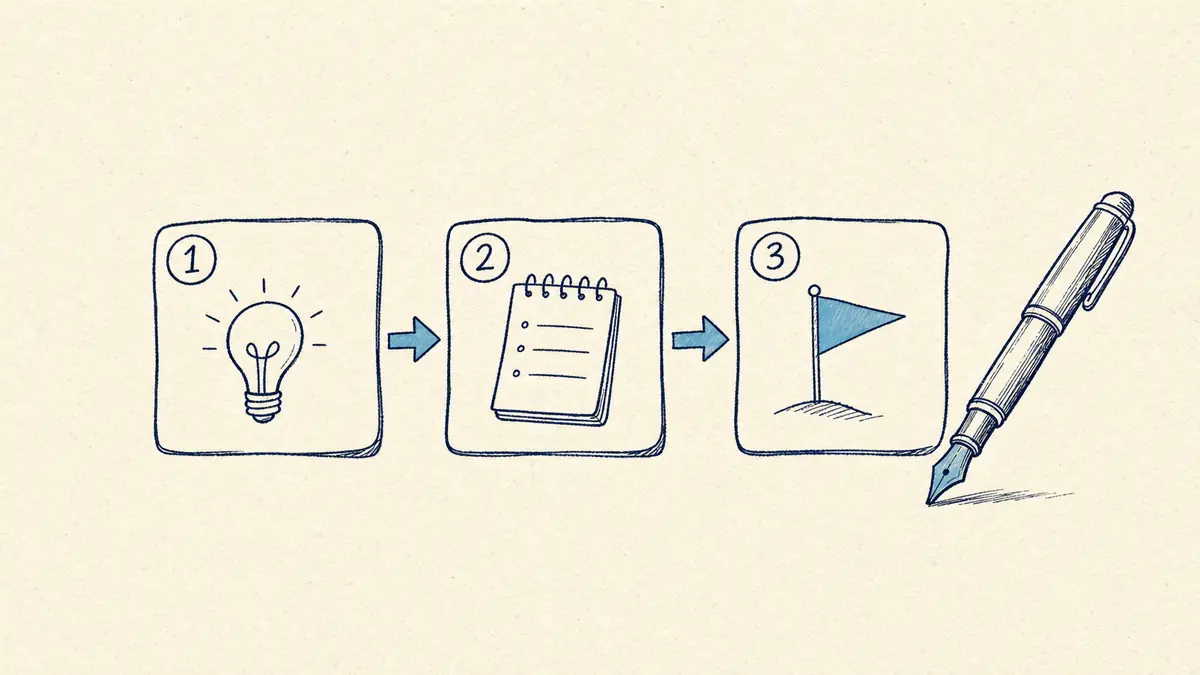
This is the framework I give every candidate I coach — my three strengths and weaknesses 3-step interview answer pattern. Three steps. No fluff. Built from the desk side, not the candidate side. By the time you finish this article you'll have the filter, the formula, and the rehearsal check that turns the most-feared interview question into the one you actually look forward to.
Step 1: Pick strengths and weaknesses that pass the panel-trigger test
Most candidates pick their strengths from a list of adjectives they read on a job board and their weaknesses from whatever sounds humble. That's why panels glaze over before you finish the first sentence.
The filter that actually works has three gates: relevance, evidence, and reframe.
Relevance. Does this strength or weakness map to something the job actually requires on a daily basis? "I'm a hard worker" applied to a cleaning crew role tells me nothing because every applicant says it. "I notice when a client's pet has been re-arranged and I put it back" tells me you've actually been in a home. Tie the trait to a daily reality of the role you're applying for. If you can't, pick a different trait.
Evidence. Can you name a specific moment in the last twelve months when this strength showed up at work? If the most recent example is from college and you're four years out, your strength has gone stale. Pick something fresher. The panel listens for recency the same way they listen for honesty — both signal that the trait is actually live in your current life, not aspirational.
Reframe. This one is mostly for weaknesses. The weakness has to be real enough to be believable but framed so the panel sees the working fix, not the open wound. "I struggle with delegation" is real. "I struggle with delegation, and last quarter I started using a shared task board so I'd be forced to hand off — three of the four hand-offs went clean, the fourth taught me to spec the brief better next time" is a real weakness with a real reframe. That's what the panel wants.
Run every candidate strength and weakness through those three gates before you commit to bringing it into the room. If any one of the three fails — no relevance to the role, no recent example, no working fix — strike it from your list and grab the next one.
A practical tip from the desk side: write down five strengths and five weaknesses cold, then cut the list in half by running the relevance-evidence-reframe filter. The three that survive are your answer set. The two that didn't make the cut are your backup pile in case the panel pushes for a fourth or pivots into "tell me another."
One more thing on the filter — and this is where I see most candidates trip. Don't pick traits because they sound impressive. Pick them because you can defend them under follow-up. A panel that hears "strategic thinking" will ask you to walk through a recent strategic decision and the trade-offs you weighed. If you picked "strategic thinking" because it sounded senior but your real strength is closer to "calm under pressure," the follow-up will expose the gap inside two minutes. Pick what's actually true. The panel can always tell.
Step 2: Build the answer with the C-R-E formula
Once you've picked your three strengths and three weaknesses, every individual answer follows the same shape. I call it C-R-E. Claim, Recent example, Effect or learning. Three sentences. Sixty to ninety seconds spoken.
Claim. One sentence. State the strength or weakness in plain English, no hedging. "One of my strengths is pattern recognition." Not "I think one of my strengths might be that I'm pretty good at noticing patterns." Hedging burns your first ten seconds and signals that you don't trust your own answer.
Recent example. One to two sentences. Name a specific moment in the last twelve months when the trait showed up. Real time, real place, real outcome. "Last fall a dispatch hand-off was breaking down between morning and afternoon crews — I noticed the same three client complaints were clustering on Tuesdays, traced it to a route-overlap, and we re-cut the schedule."
Effect or learning. One sentence. For a strength, name the result. For a weakness, name what you took from it or the system you put in place. "Tuesday complaints dropped to zero the following month." For a weakness: "Now I cap myself at three open route experiments at a time so I don't overload the team."
That's it. Three sentences. Spoken aloud it should land in sixty to ninety seconds. If it runs longer, you're padding — usually with throat-clearing phrases like "so basically what I would say is" or "I guess the way I'd put it." Cut those. The panel will thank you.
Here's the formula applied to a strength, in full, the way I'd say it on a panel:
"One of my strengths is calm under operational pressure. Last winter we had a Saturday where two of the crew leads called in sick within an hour of each other and we had eleven jobs on the book — I re-routed the schedule, called three clients to push their slots ninety minutes, and we finished the day with zero complaints. What I took from it is that calm isn't the absence of stress, it's having a triage order you trust before the stress hits."
That's roughly forty-five seconds. Three sentences. Claim, recent example, effect. The panel hears a real moment, a real outcome, and a learned principle — all in under a minute. That's the shape every hiring panel I've sat on actually rewards.
For weaknesses, the same shape, but the third sentence carries more weight because that's where the working fix lives:
"One of my weaknesses is that I default to doing things myself when a hand-off feels slow. Last spring I caught myself re-cleaning two homes after a new crew member — not because the work was bad, because I hadn't briefed her well. The fix is a written brief now for every new-crew client, and re-do rates dropped to one in the last quarter."
Same forty-five seconds. Same three-sentence shape. Real, recent, and the panel sees the system you've built to fix it.
Step 3: Stress-test before you walk in
This is the step most candidates skip and the step that separates a prepared answer from a rehearsed-sounding one. Two checks. Both happen the day before the interview.
Check one: out-loud rehearsal. Read your three strengths and three weaknesses out loud, three times each, on a timer. The first pass will sound stiff — that's fine. The second will smooth out the phrasing. The third should sound like you, not a script. If any answer runs past ninety seconds on the third pass, cut a clause from the middle sentence. If any answer runs under forty-five seconds, your example is too thin — add one more concrete detail.
Out-loud matters. Reading silently lets your brain fill in transitions that won't actually be there when you're sitting across from three strangers. The panel will hear every awkward pause that a silent rehearsal hid from you. If you have someone you trust, do the third pass with them sitting across from you — the room dynamic alone surfaces tics you can't hear when you're rehearsing into a mirror or your phone.
Check two: follow-up question prep. Every answer you give will trigger a follow-up. If your strength was pattern recognition, the panel will probably ask "tell me about a time the pattern was wrong." If your weakness was delegation, expect "what's the most recent hand-off you regretted?" Write down the two most-likely follow-ups for each of your six answers and rehearse those too. You don't need a polished response — you need to know you have one and not freeze.
A specific tip: the cheapest follow-up the panel will throw is "can you give me another example?" If your first example for a strength was a route-routing story, have a second, unrelated example ready. The panel asks for a second one to test whether the first was a one-off or a real pattern. Treat the second example like a quiet credibility check, not a curveball.
If you do both checks the day before, you walk in with confidence that isn't faking. You know the claim, the example, the effect, and the most likely follow-up. The panel reads that as preparation. Preparation reads as competence.
My three strengths and weaknesses — a worked example
Here's the framework applied to me, end-to-end, the way I'd answer in a real interview today.
Strength one: pattern recognition.
Claim: One of my strengths is spotting patterns in operational data before they become problems. Recent example: In the last two quarters I traced two separate client-complaint clusters back to scheduling logic the rest of the office had missed — one was a Tuesday route-overlap, one was a Friday afternoon crew-fatigue pattern. Effect: Both fixes were implemented inside a week and complaint volume on those days dropped to single digits.
About fifty seconds spoken. Real, recent, specific. If the panel asks for a second example, I have the dispatch hand-off story from Step 2 ready.
Weakness one: under-delegating on new client briefs.
Claim: One of my weaknesses is that I default to writing client briefs myself when a new account onboards. Recent example: In Q1 we onboarded a six-property portfolio and I wrote all six briefs at midnight instead of training a lead to do it — the briefs were clean but I was burned out by Wednesday and the team didn't learn the brief format. Effect: I've since built a brief template and trained two leads on it; the last three new-client briefs were done by the team, not me.
That's the shape. Honest weakness, recent moment, working fix. The panel hears that I know what the weakness is, I know what it cost me, and I've built a system. That's a fundamentally different signal than "I work too hard."
The third strength and weakness I keep in reserve — calm under operational pressure (the winter-Saturday story) and a tendency to over-spec new processes before validating them with the team. Six answers, all built on the C-R-E shape, all stress-tested out loud the night before. That's the answer set I'd walk into any interview with tomorrow.
Common 3-step mistakes that flunk the panel
Three patterns I see candidates fall into every single hiring cycle. Each one is the difference between a panel that wants to bring you back and a panel that thanks you and moves on.
Mistake one: examples older than twelve months. If the last time your "leadership" showed up was your senior project in college and you're three years out, the panel hears stale. Pick a fresher trait or a fresher example — even a small, recent moment beats a polished, ancient one. Recency signals that the trait is alive now, not a story you've been carrying around.
Mistake two: the humble-brag weakness. "I'm a perfectionist." "I care too much." "I work too hard." Every panel I've ever sat on rolls inwardly at those answers — they signal that the candidate either hasn't done the self-reflection or doesn't trust the room enough to be honest. Pick a real weakness with a working fix. The panel respects the honesty more than they ever respected the humble-brag.
Mistake three: skipping the stress-test. Candidates who don't rehearse out loud sound silent-script — every transition has a small hitch, every example runs a beat too long. The panel notices inside ninety seconds. The fix is free: read your six answers out loud three times the night before. Free preparation, measurable result.
Memorize the shape, not the words
Read more on the interview-prep side: what are your weaknesses — the best way to answer, what are your strengths interview question, 16 strengths and weaknesses examples for a job interview, and strengths-based interview questions. For raw trait libraries to filter from, see the list of personal strengths examples and the list of personal weaknesses examples.
The 3-step interview answer isn't a script. It's a shape. Filter your traits through relevance, evidence, and reframe. Build each answer with Claim, Recent example, Effect. Stress-test out loud the day before. That's it.
Memorize the shape, not the words. The shape is what lands.
Alex Host is the hiring lead at Top Care Cleaning, a family-owned residential cleaning business in Grand Rapids, Michigan, founded in 1980. He's sat on hundreds of hiring panels since 2010 across crew, dispatch, and operations roles.
Alex isn't a corporate recruiter or a career coach. He runs the desk at a local service business — but the strengths-and-weaknesses question gets asked the same way at every panel, in every industry. The 3-step framework here is the same one he uses to coach Top Care candidates and the same one he'd walk into any interview with himself tomorrow.